
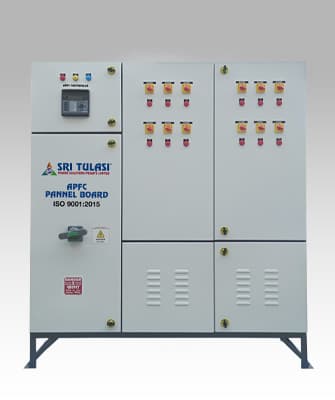
Rising tariffs and utility penalties make APFC essential for HT/LT consumers. Sri Tulasi APFC panels combine capacitor steps with intelligent switching to maintain the target power factor under varying reactive demand. The semi-automatic controller uses a purpose-built electronic circuit to follow load patterns, while manual models rely on MCB switching per customer philosophy. Site surveys review existing banks and harmonics before recommending a tailored bank size. Marketing bullets on the source site cite up to about 5% energy savings, extended switchgear life, elimination of manual intervention, and paybacks in the 5–10 month range on favourable loads.
Key Features
- Automatic or manual PF control strategies
- Reduces maximum demand and kVAr penalties
- Extends life of cables, transformers, and breakers
- Engineered after plant survey and existing capacitor audit
- Product range 7.5–50 kVAr on marketing page (extend on enquiry)
Where it is used in real life
Everyday situations—not just industry names—so you can picture whether this product is relevant for you.
Apartment towers and campuses on HT metering
- When the electricity bill includes a reactive penalty because lifts, pumps, and HVAC idle with poor power factor during low-load nights.
- When maximum-demand kVA charges jump because uncorrected reactive current inflates the recorded peak—even real kW is unchanged, the bill still hurts.
- New towers still filling occupancy: early residents use little real power but magnetizing currents from transformers and lifts still draw kVAr unless corrected.
Factories with many motors
- Textile mills, plastic extruders, or flour mills where motors run partly loaded and the utility expects you to bring cos φ back near unity.
- Cement, mining, and aggregate plants with long conveyor strings—many motors online at partial torque; APFC banks switch steps as sections start and stop.
Commercial malls and cold chains
- Mixed lighting + motor loads where capacitor steps track the changing reactive profile through the day—morning HVAC pre-cool vs evening cinema peak look very different.
- Cold storage warehouses where compressors cycle while LED lighting stays flat; automatic banks avoid over-correction when the cold store unloads pallets.
Hotels, hospitals, and institutions
- Large kitchens, laundry tunnels, and chiller plants in hotels—reactive demand spikes during banquet prep; APFC keeps HT readings inside utility tolerance.
- Universities and IT parks with scattered labs and lecture blocks sharing one incomer—capacitor steps follow semester timetables without manual switching.