
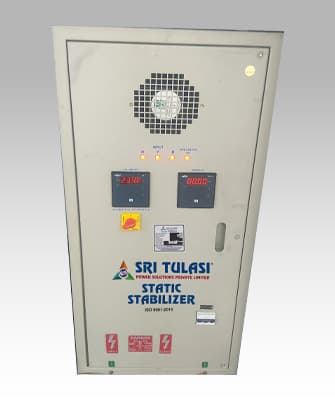
IGBT static voltage stabilizers use PWM AC-to-AC switching with insulated-gate bipolar transistors to hold the output steady with extremely fast response—on the order of half a cycle to a few tens of milliseconds depending on rating. Single-phase models span roughly 1–15 kVA for residential and commercial sensitive electronics; larger three-phase systems extend to hundreds of kVA with individual phase control, wide input window, and correction rates up to thousands of volts per second. The design targets medical, IT, industrial drives, and other loads that cannot tolerate long correction times. Built-in protections cover input/output over/under voltage, overload, short circuit, single phasing (where applicable), and optional Class-2 surge protection with auto/manual restart.
Key Features
- IGBT PWM AC–AC control with individual phase regulation (3 PH)
- Response time down to ~20 ms on many ratings
- Efficiency ≥97% across 20–100% load (series dependent)
- Digital / LCD microprocessor-based metering and set-points
- EMI/RFI filtering and inbuilt surge protection options
- Natural air or fan-forced cooling; auto-bypass on selected models
Where it is used in real life
Everyday situations—not just industry names—so you can picture whether this product is relevant for you.
Hospitals and diagnostic imaging
- When a voltage dip during a scan would force a repeat exposure, reschedule patients, or extend department waiting lists.
- Labs running chemistry analysers, centrifuges, or blood-bank refrigerators that must not see long gaps in correction time—samples and inventory are at stake.
- Hybrid theatres and cath labs where imaging and life-support run together; fast correction reduces the chance of simultaneous equipment alarms.
IT, banking, and control rooms
- Server racks or edge nodes where even a brief sag can reboot equipment before a mechanical servo finishes moving—static correction catches dips other stabilizers miss.
- SCADA or safety PLC panels in refineries, metros, or water treatment that trip on undervoltage if correction is slow, causing cascading pump or valve events.
- ATM clusters and core banking switches in branches on weak last-mile feeders, especially monsoon season when poles and joints fault more often.
Precision industry and smart infrastructure
- CNC, laser cutting, or additive manufacturing where tool paths spoil if the supply glitches for a fraction of a second—scrap cost per incident is high.
- Smart-city traffic, signalling, or tunnel ventilation drives fed from weak urban feeders where motor drives are sensitive to sags during rush-hour load.
- Semiconductor or PCB test floors where a single glitch can invalidate a long automated test sequence or damage delicate fixtures.
Renewables, microgrids, and mixed backup sites
- Sites that blend grid, diesel, and solar where the incomer voltage and frequency handovers are abrupt—fast static regulation smooths transitions for downstream loads.
- Islanded or weak microgrids in industrial estates where a large motor start would otherwise collapse the local bus for everyone on the same transformer.