
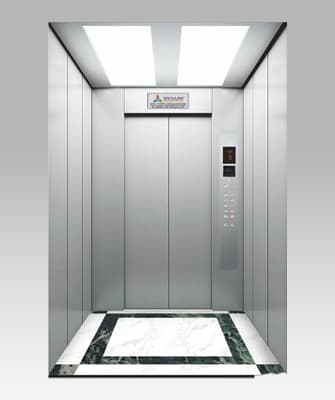
Elevators are presented as essential vertical transport for homes, villas, apartments, and commercial towers. The legacy page outlines working principles, major lift types, and safety philosophy. Cabin and landing finishes include MS/SS doors, hairline position indicators, anti-skid PVC flooring, cabin fans and LED lighting, handrails, and optional music on automatic doors. Safety and comfort items include battery-backed emergency light and alarm, automatic fan, floor annunciator, full-length infrared door sensors, spring buffers, progressive safety gear, overspeed governor, ARD, final limit switches, and one-year free service on the promoted package.
Key Features
- Battery-operated emergency light and alarm
- Anti-skid PVC cabin flooring
- Hairline SS position indicators and operating panels
- MS or SS cabin and landing door frames
- Cabin fan and LED spot lighting; optional MP3 on auto doors
- OSG, ARD, spring buffer, progressive safety gear, infrared door sensors
- First-year free service on standard promotional scope
Where it is used in real life
Everyday situations—not just industry names—so you can picture whether this product is relevant for you.
Private homes and duplex villas
- A compact passenger lift so elderly family members avoid stairs while carrying groceries or laundry between floors—especially during monsoon slip risk.
- Multi-level villas with home theatres or gyms upstairs: a lift removes the hesitation to use upper floors daily, improving how the whole house is lived in.
Mid-rise apartments and senior living
- Eight- to fifteen-floor buildings where stretcher-capacity lifts are mandated for ambulance access and firefighter evacuation planning.
- Assisted-living and retirement communities where walkers and wheelchairs are common—lifts are not a luxury but part of daily dignity and care workflows.
Retail and small commercial blocks
- Goods lifts for stock movement between basement parking and showrooms without blocking passenger lifts during delivery hours.
- Small IT offices in walk-up buildings retrofitted with a lift so clients and employees with mobility limits can reach meeting floors without embarrassment.
Hospitals, clinics, and diagnostic buildings
- Outpatient blocks where patients arrive on stretchers for day procedures—bed lifts align with ramped ambulance bays and ward corridors.
- Multi-speciality towers where heavy imaging equipment is moved between floors for upgrades—goods-rated lifts save crane costs through windows.