
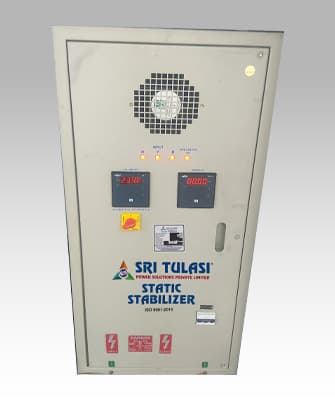
Static stabilizer technology delivers very fast correction without moving parts on three-phase feeds. Protects CNC, data-centre distribution, and sensitive process lines from sags, surges, and imbalance.
Key Features
- IGBT PWM AC–AC control with individual phase regulation (3 PH)
- Response time down to ~20 ms on many ratings
- Efficiency ≥97% across 20–100% load (series dependent)
- Digital / LCD microprocessor-based metering and set-points
- EMI/RFI filtering and inbuilt surge protection options
- Natural air or fan-forced cooling; auto-bypass on selected models
Where it is used in real life
Everyday situations—not just industry names—so you can picture whether this product is relevant for you.
Hospitals and diagnostic imaging
- When a voltage dip during a scan would force a repeat exposure, reschedule patients, or extend department waiting lists.
- Labs running chemistry analysers, centrifuges, or blood-bank refrigerators that must not see long gaps in correction time—samples and inventory are at stake.
- Hybrid theatres and cath labs where imaging and life-support run together; fast correction reduces the chance of simultaneous equipment alarms.
IT, banking, and control rooms
- Server racks or edge nodes where even a brief sag can reboot equipment before a mechanical servo finishes moving—static correction catches dips other stabilizers miss.
- SCADA or safety PLC panels in refineries, metros, or water treatment that trip on undervoltage if correction is slow, causing cascading pump or valve events.
- ATM clusters and core banking switches in branches on weak last-mile feeders, especially monsoon season when poles and joints fault more often.
Precision industry and smart infrastructure
- CNC, laser cutting, or additive manufacturing where tool paths spoil if the supply glitches for a fraction of a second—scrap cost per incident is high.
- Smart-city traffic, signalling, or tunnel ventilation drives fed from weak urban feeders where motor drives are sensitive to sags during rush-hour load.
- Semiconductor or PCB test floors where a single glitch can invalidate a long automated test sequence or damage delicate fixtures.
Renewables, microgrids, and mixed backup sites
- Sites that blend grid, diesel, and solar where the incomer voltage and frequency handovers are abrupt—fast static regulation smooths transitions for downstream loads.
- Islanded or weak microgrids in industrial estates where a large motor start would otherwise collapse the local bus for everyone on the same transformer.