
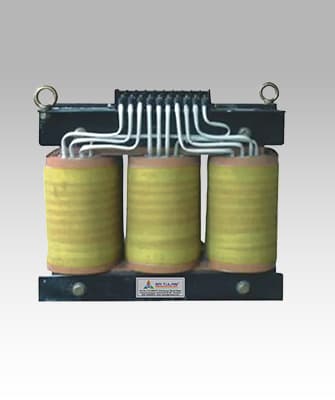
K-rated isolation transformers are engineered for harmonic-rich currents so that heating and stray losses remain controlled. Coil designs target low eddy-current loss and high harmonic current capability, while cores run at moderated flux densities to tolerate voltage distortion from non-linear loads. The catalogue positions them as the right choice when harmonics would otherwise overheat standard transformers or trip protection. Typical construction mirrors ultra-isolation variants with oversized neutrals, detailed impulse and insulation tests, and MS enclosures with optional metering.
Key Features
- K-1, K-4, K-9, K-13, K-20 (and custom) factors
- 200% rated neutral where harmonics demand it
- Excellent transverse-mode noise attenuation
- Core of high-grade electrical steel; copper or aluminium windings
- Common-mode rejection up to 10 kHz > 100 dB (quoted)
- Class H insulation / 180 °C systems available
Where it is used in real life
Everyday situations—not just industry names—so you can picture whether this product is relevant for you.
UPS rooms and data centres
- Behind a large UPS where the input current is spiky because the UPS draws charging pulses—ordinary transformers run hot; K-rated types are sized for that waveform.
- White-space cooling CRAH units and PDU feeds that share neutrals with IT harmonic currents—oversized neutrals and K-factor design prevent overheated busbars.
- Colocation halls where tenants change racks frequently; harmonic signature shifts over time but the isolation transformer must stay within temperature class year-round.
Printing and plastics with VFDs everywhere
- A shop floor with dozens of variable-frequency drives on one transformer—triplen harmonics circulate on the neutral unless the transformer is designed for them.
- Extrusion and injection-moulding plants where barrel heaters (resistive) and screw motors (non-linear) load the same LV panel—K-rated magnetics tolerate the mix.
Hospitals with mixed medical + IT loads
- Floors where imaging, IT closets, and ward power coexist on the same electrical backbone—patient beds and servers no longer fight over neutral heating.
- Renovated wings where old fluorescent ballasts and new LED drivers temporarily coexist, both contributing different harmonic fingerprints.
Green buildings and LED-heavy commercial
- Malls and airports that replaced most lighting with LED drivers—total harmonic distortion on neutrals rises; K-rated transformers avoid nuisance breaker trips.
- High-rise offices with dimmable LED façades and daylight harvesting—evening ramp-downs change harmonics quickly; the transformer is still sized for worst-case.