
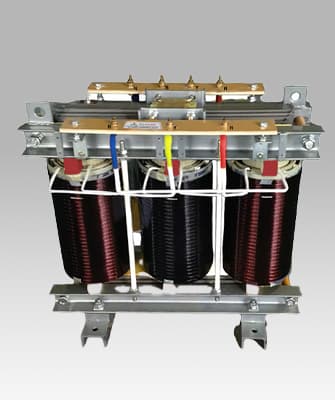
Sri Tulasi manufactures continuously variable autotransformers (dimmerstat / variac) for stepless AC voltage control from 0–270 V single-phase or 0–470 V three-phase depending on series. Air-cooled models span roughly 4–600 A per phase class, while oil-cooled models extend toward 5000 A. Toroidal cores, high-grade copper, carbon brushes on silver-plated commutators, and Class F insulation are highlighted for low loss, minimal waveform distortion, and long life. Motorized drives, panel-mount enclosures, and parallel/series coil arrangements allow higher current or voltage when engineered as a system. The manufacturing plant is equipped for routine tests per IS:5142 with substantial installed capacity.
Key Features
- Stepless voltage control with high efficiency (~98% class)
- Silver-plated commutator and spare brush kits
- Motorized and manual dial options
- Air- and oil-cooled constructions for indoor/outdoor duty
- Parallel coils for higher current; series for higher voltage
- Low temperature rise and rugged mechanical assembly
Where it is used in real life
Everyday situations—not just industry names—so you can picture whether this product is relevant for you.
School, college, and service labs
- Students slowly raise voltage on a motor or heater experiment without clicking through coarse transformer taps—curves of current vs voltage are easier to teach.
- Repair benches proving appliances at multiple voltages before return-to-customer, especially imported goods with ambiguous nameplate ranges.
- IEEE-style student projects testing inrush, saturation, or protection relays where the supervisor wants stepless control from a single knob.
Heat treatment, ovens, and kilns
- Small furnaces or salt-bath heaters where an operator dials heat by adjusting voltage smoothly instead of switching heating bands on/off—temperature ramps are gentler on castings.
- Glass annealing or ceramic studio kilns during recipe development when artisans experiment with soak profiles before fixing silicon-controlled recipes.
Theatres, dimmers, and legacy lighting
- Where architectural dimming predates modern silicon dimmers, a variac can still be the simplest brute-force brightness control for incandescent loads.
- Museum and gallery temporary exhibits where curators want analog control of tungsten halogen without investing in new DMX infrastructure for a short run.
Motor testing, generator shops, and field commissioning
- Rewinding shops bringing a repaired motor from zero speed tests upward while watching current draw—variacs avoid slamming full voltage on unknown windings.
- Generator and alternator test beds where the operator simulates weak-grid conditions before synchronizing to a live bus.